13 October 2026
Sand, rubble, coral: telling reef flat cover classes apart from above
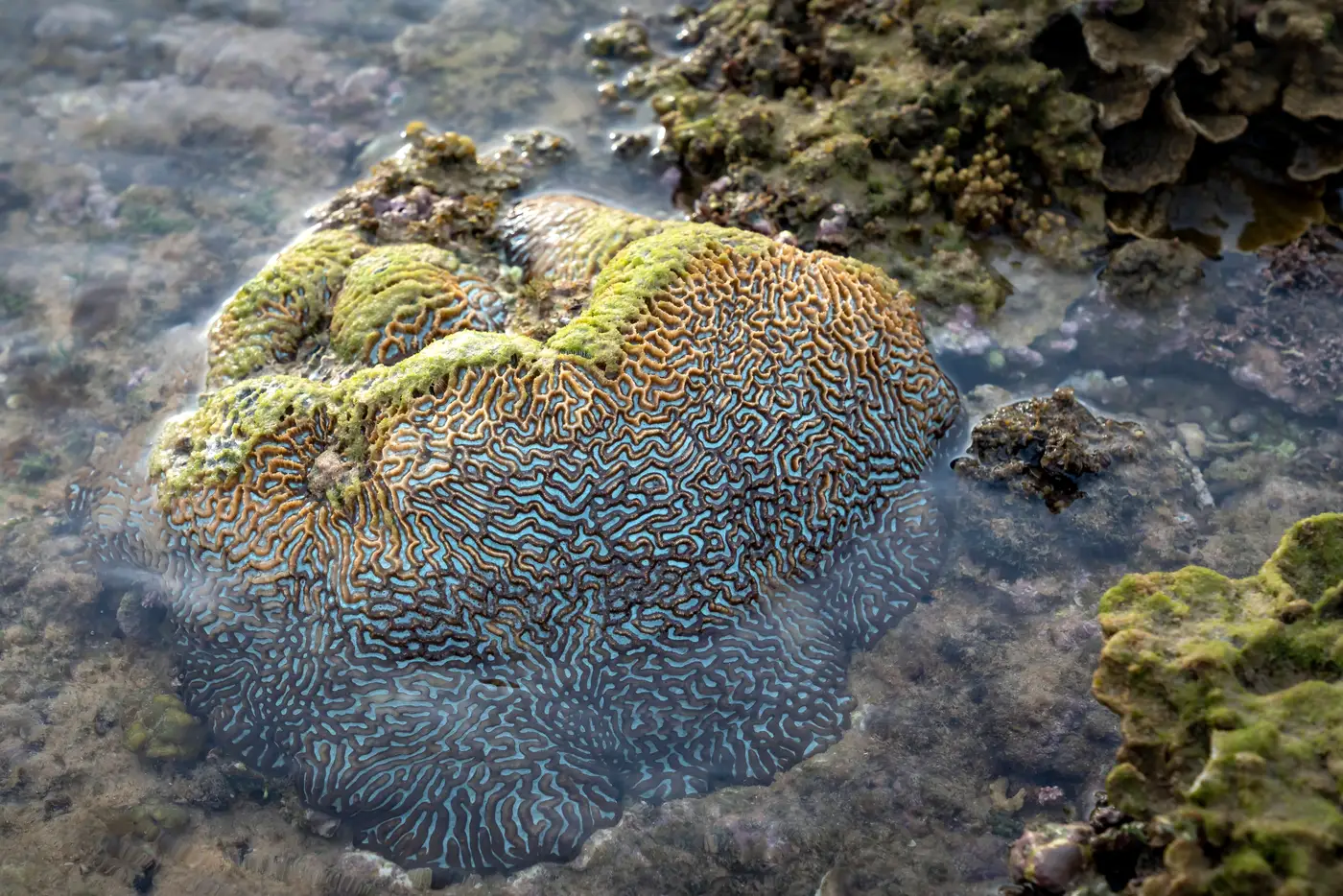
Stand on the boat at low tide and the reef flat looks like one pale sheet. Sand, old rubble, bleached coral heads, they all throw back a lot of light and from a distance they blur into the same bright patch. Anyone who has tried to sketch a cover map off a single photo before the dive team goes in knows the problem. The three classes that matter most for a seasonal survey, live coral, dead rubble, bare sand, don't separate cleanly until you know what to look for.
What actually separates these three
Sand is the easy one once you've seen enough of it. It reflects evenly across the visible bands, bright and flat, with almost no texture at the scale a quadrat would pick up. A sand patch on a reef flat looks the same from one edge to the other.
Rubble is sand's messier cousin. It's broken coral skeleton, usually white to grey, and it carries texture that sand doesn't: little shadows between fragments, edges catching light at different angles depending on how they settled after the last storm. Brightness-wise it sits close to sand, sometimes brighter if the fragments are fresh, sometimes duller if algae film has started growing over it.
Live coral is where the signature gets more interesting. Healthy tissue carries pigment, zooxanthellae giving it that brown, green or gold cast depending on species and depth. That pigment pulls down reflectance in specific wavelengths compared to bare carbonate. Structure matters too: coral heads cast their own small shadows, branch and plate colonies break up the surface in a way flat sand and settled rubble don't. Strip out the color and texture is often the tell.
Algae turf and sediment overlay complicate all three. A thin film of turf algae over dead coral or rubble shifts the tone toward green and can make a dead patch read closer to live tissue than it should. Sediment settling into gaps after a swell does the opposite, washing a coral patch back toward the brightness of sand.
Where the reading goes wrong
Depth changes everything before you even get to substrate. Water column absorption eats the red band first, then green, so the same coral head looks different at one meter than it does at four. Tide height at the moment a photo or pass was taken shifts how much of the flat is even wet, and glare off a flat calm surface can wash a whole quadrant out to white regardless of what's underneath it.
This is where bleaching gets tricky to call from a single image. A freshly bleached coral head and a patch of clean rubble can land in almost the same brightness range. One is a coral colony under stress, still alive, still worth a dive team's attention. The other is substrate that's been dead for a season or more. Tell them apart on one photo and you're guessing. Tell them apart by watching how that exact patch's signature moved since the last seasonal pass, and the guess gets a lot smaller: a spot that was dark and textured last season reading pale and flat this season is a different story than a spot that's been pale and flat for three seasons running.
That's the real argument for reading reef flat cover class by class rather than scanning for "bright versus dark." Sand stays sand. Rubble shifts slowly as storms move it around. Coral is the one that changes fast when something's wrong, and catching that change early is most of what a seasonal monitoring run is for.
Coral Reef Mapping builds that kind of seasonal cover map from multispectral imagery and flags where the signature has shifted toward whitening since the last pass, giving a monitoring officer a wide first look at the reef flat before divers go in to confirm it.
If your reef flat classification has been running on gut feel and last season's memory, a season-over-season cover map is worth a look before your next survey window opens.