19 October 2026
Field notes: the season the reef flat turned from coral to algae
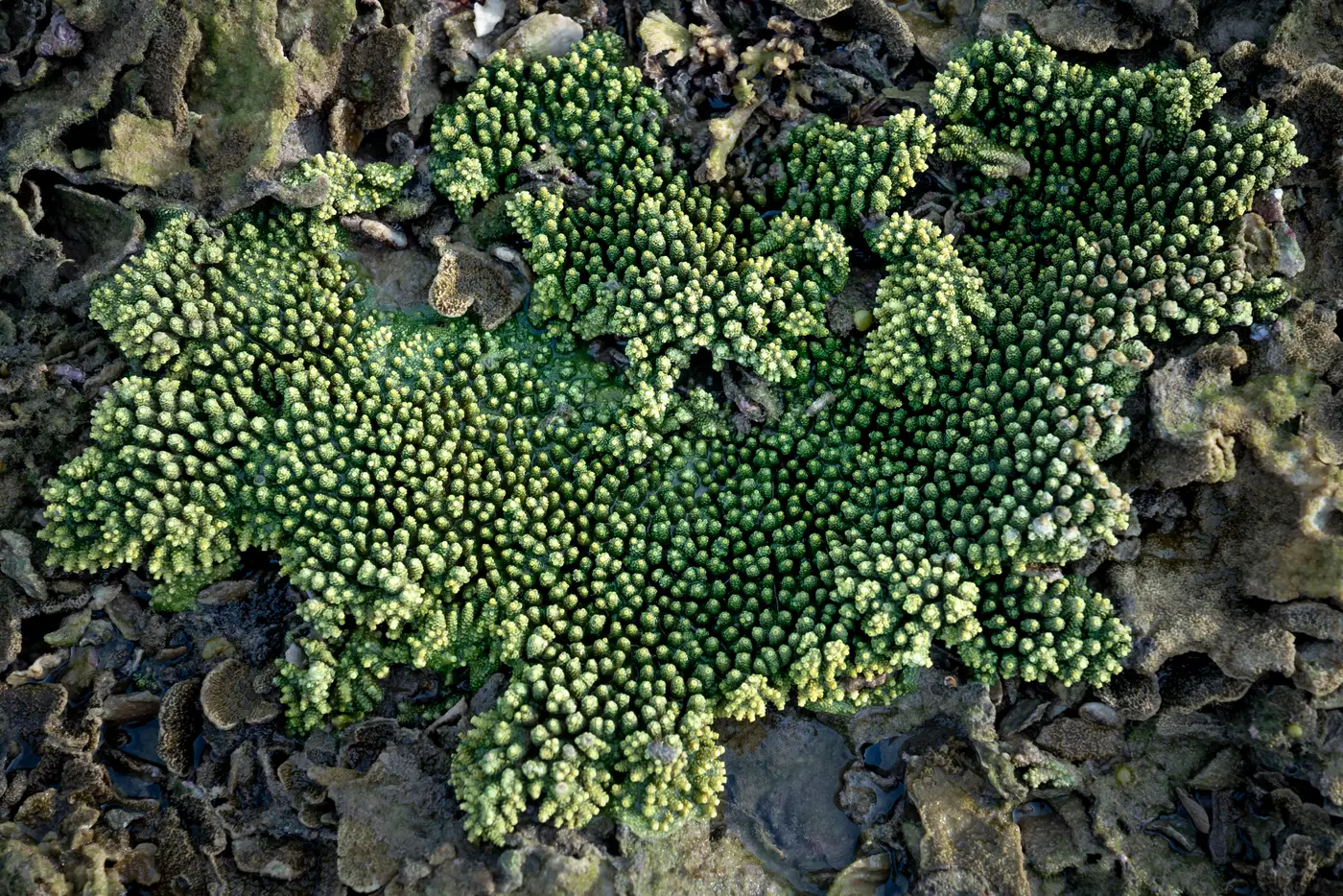
We almost missed it, which is the part that still bothers me.
Two passes. That's all it took to go from a reef flat I'd have called coral-dominated in a staff meeting to one where the seagrass survey tech asked, not unreasonably, "when did this turn into an algae flat." Spring to late summer. One wet season in between, a mild one by the rain gauge, nothing that looked like a trigger.
The spring pass looked fine. Not great, fine. Cover was mixed the way our back-reef sections always run mixed: coral heads holding their color, some turf in the usual grooves, rubble where the last cyclone left it, sand patches you could set your watch by. Nothing in the quarterly summary flagged for follow-up. I remember writing "stable, monitor as scheduled" and moving on to the forereef transects, because that's where the funding conversation always points your attention.
By the late-summer pass, the signature had moved. Not subtly. The patches that read as coral in spring were reading as algae turf or fleshy macroalgae, and the transition wasn't scattered across the flat, it was concentrated in the shallowest third, the section that sits exposed longest on a spring low tide. Whatever stressed that section, heat, a short irradiance spike, a nutrient pulse we don't have instrumentation to catch, it hit a narrow band hard and left the deeper parts of the same flat looking close to normal.
That's the detail I keep coming back to. A section-level write-up for the whole monitoring area would have called this flat "mostly stable with localized decline," which is true and also useless, because the localized decline is the entire story. The dive team confirmed it on the ground two weeks later: bleached and dead coral skeleton under a film of turf, exactly where the shallow band sat, exactly as thin a strip as the between-pass comparison suggested. They hadn't scheduled that section for a transect that quarter. It wasn't due.
I bring this up because the instinct on a lot of monitoring programs is to trust the schedule over the signal. Your transect rotation gets set months ahead, based on last year's priorities, and a reef flat that looked stable last time doesn't jump the queue just because something's nagging at you. That's a reasonable way to run a program with a small dive team and a big monitoring area. It's also exactly how you miss a two-pass shift, because by the time the scheduled transect comes around, the dive team is documenting what already happened instead of catching it mid-turn.
What would have helped, looking back, is something that doesn't need the schedule's permission to look. A coral, algae, rubble, and sand breakdown pulled every season regardless of which sections are due for a dive, flagged automatically where the signature shifts toward whitening between passes. Not instead of the transect, we still need boots and tape and a trained eye on substrate type. But as the thing that tells you where to send the dive team next, instead of where the rotation already said to send them. That's more or less what a seasonal reef cover comparison gives you, a wide first look across the whole flat before anyone gets wet, so the localized bit doesn't hide inside a "mostly stable" summary line.
The flat in question is still algae-dominated in the shallow band as of this write-up. Whether it recovers or the coral there is functionally gone is a question for the next few passes, not this one. But I'd rather catch the next shift between seasons than read about it in a transect report eight months after it started.
If your schedule is the only thing deciding where the dive team looks next, it's worth building that wide first look into the rotation.